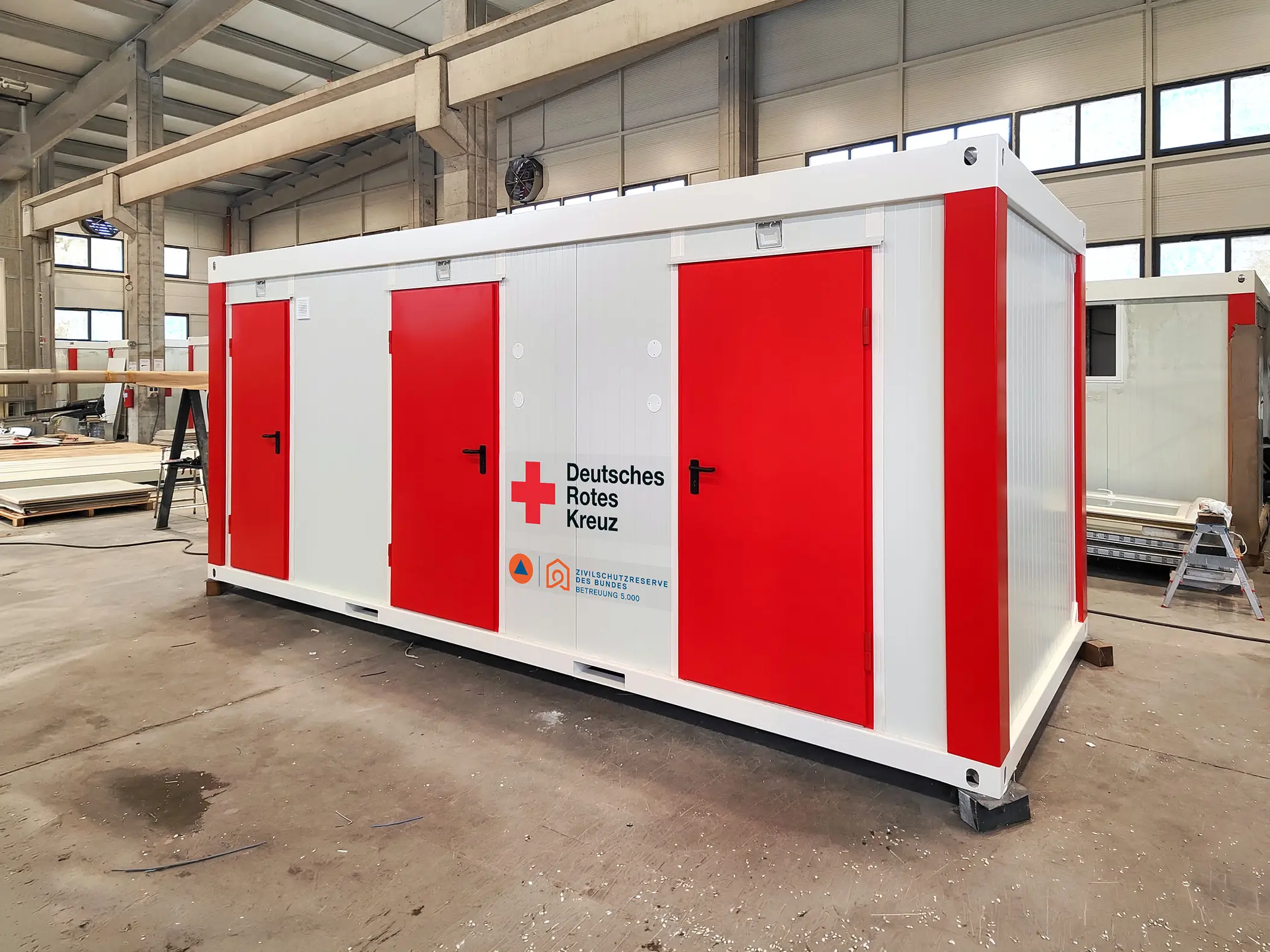
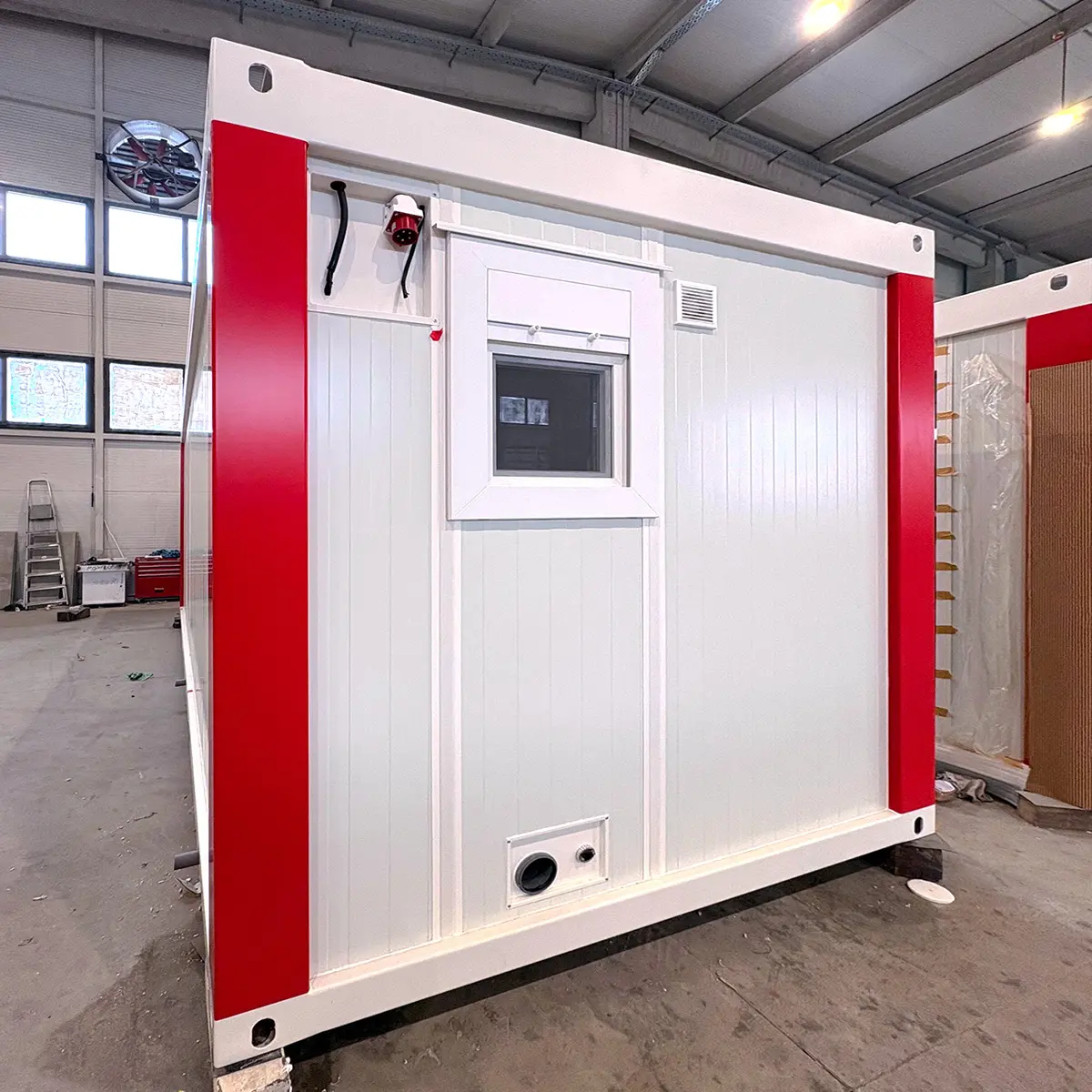
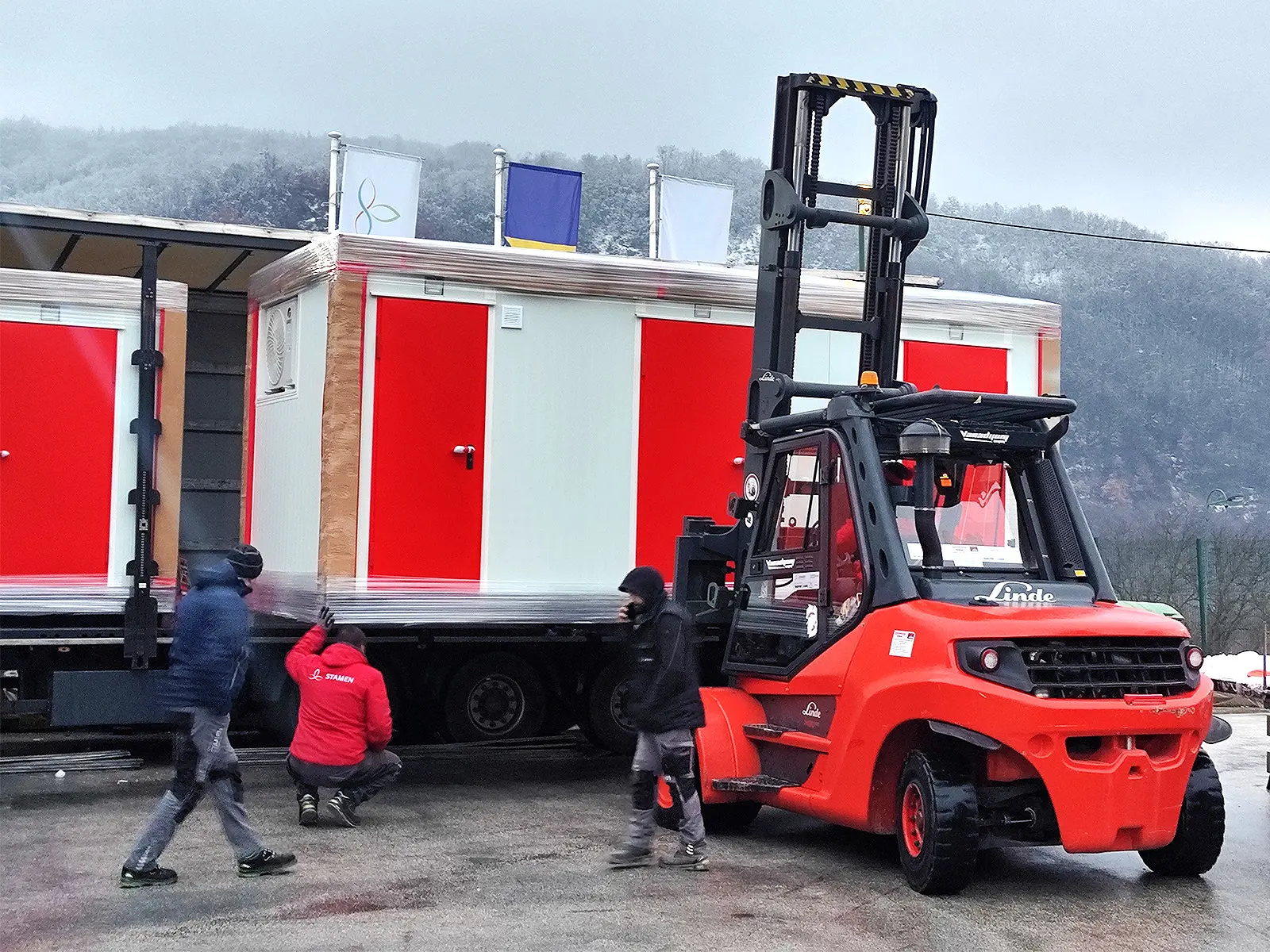
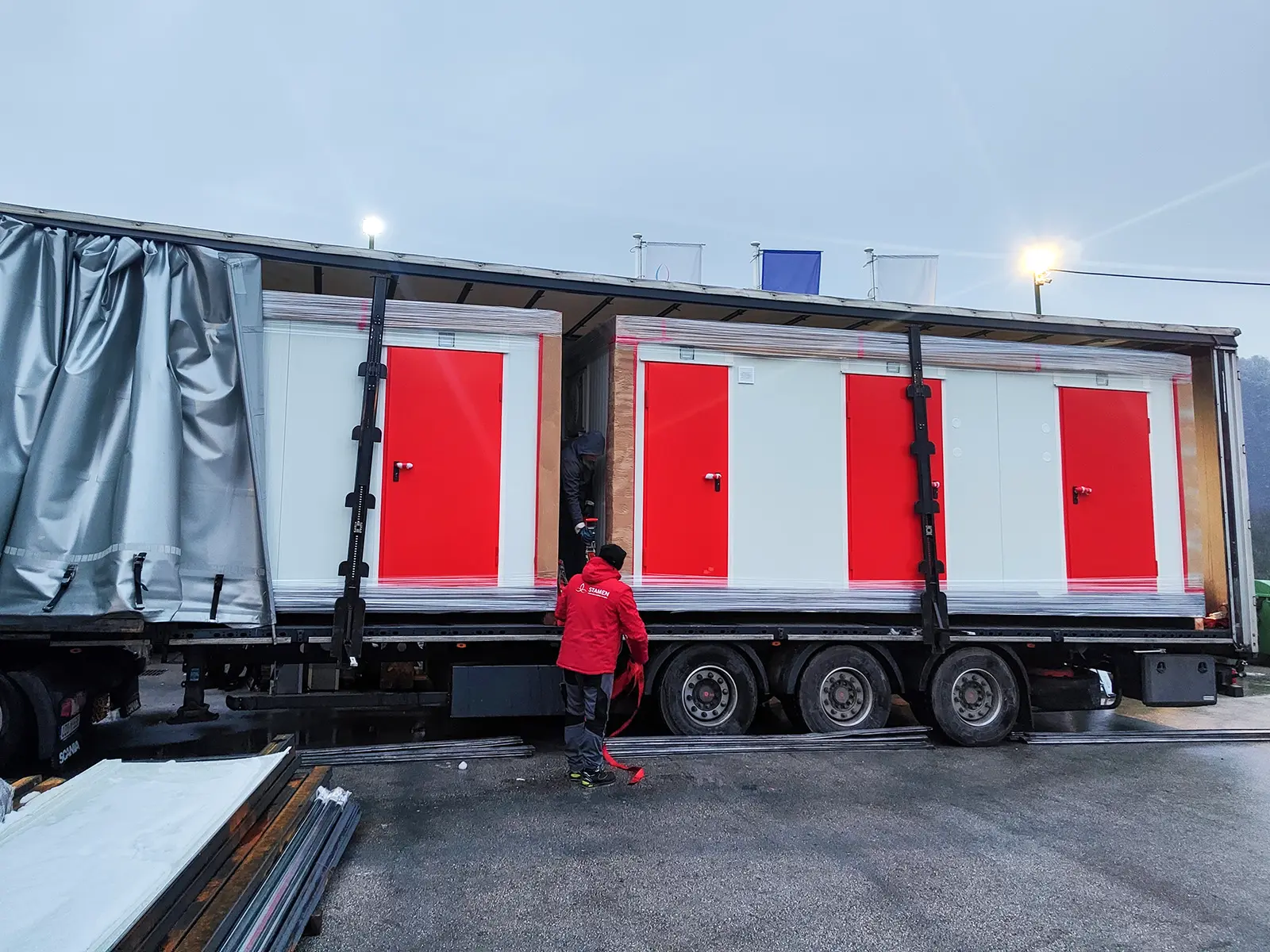
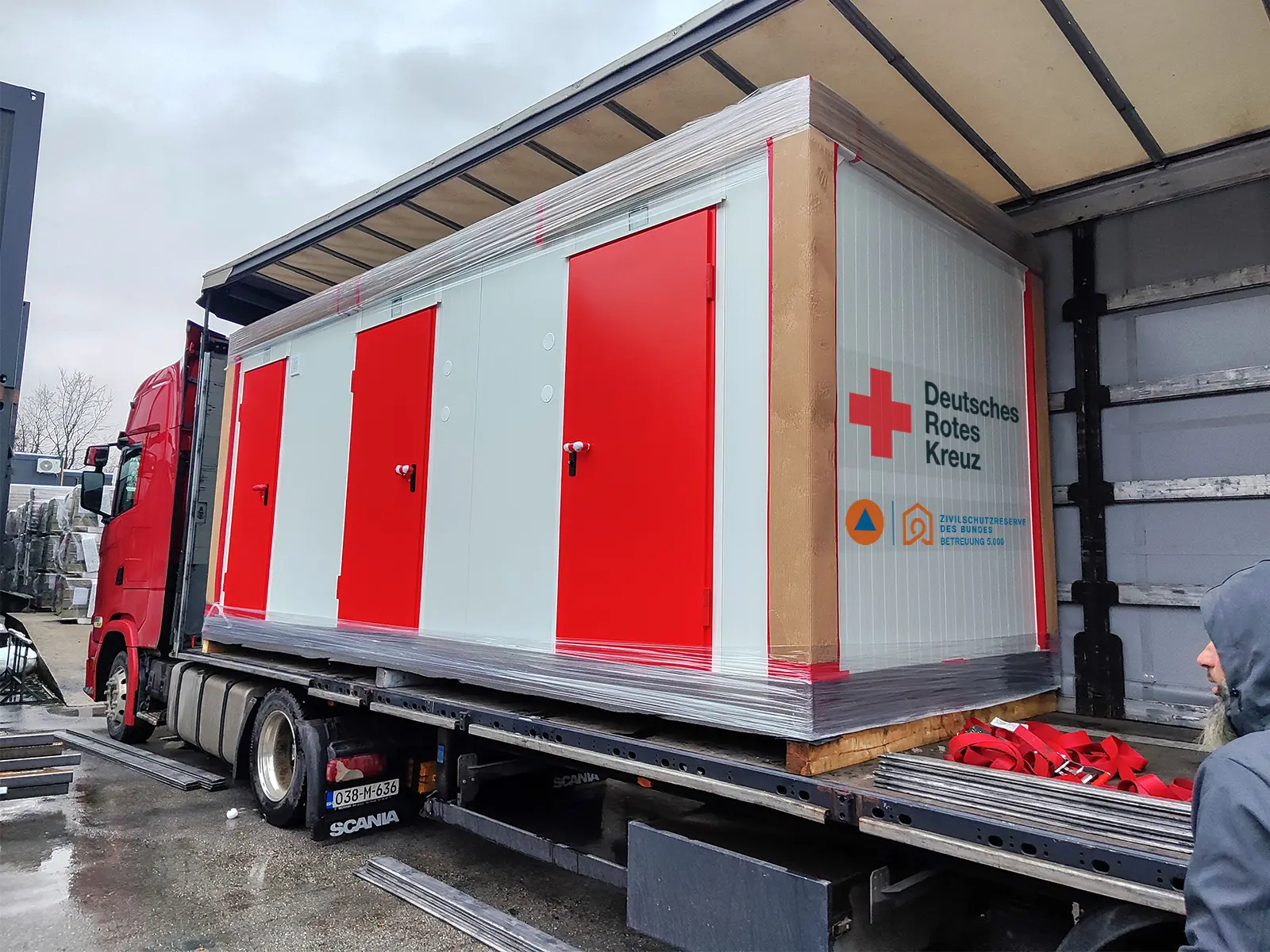
For German Red Cross (Deutsches Rotes Kreuz) STAMEN designed and delivered a series of multifunctional modular sanitation units for the — purpose-built to meet the precise demands of humanitarian operations in the field.
These fully self-contained modules are engineered to deploy fast and perform reliably. Stored in a depot and ready for immediate transport, each unit is fully operational the moment it connects to external water, drainage, and electrical supply. Every design decision — from materials to controls — reflects an unwavering focus on durability, safety, hygiene, and user dignity, even in the most demanding conditions.
The project comprises three distinct module types:
- Accessible Sanitation Modules — designed for people with disabilities
- Staff Sanitation Modules — designed for medical and emergency personnel
- Laundry Modules — designed for large-scale hygiene operations
1. Accessible Sanitation Modules
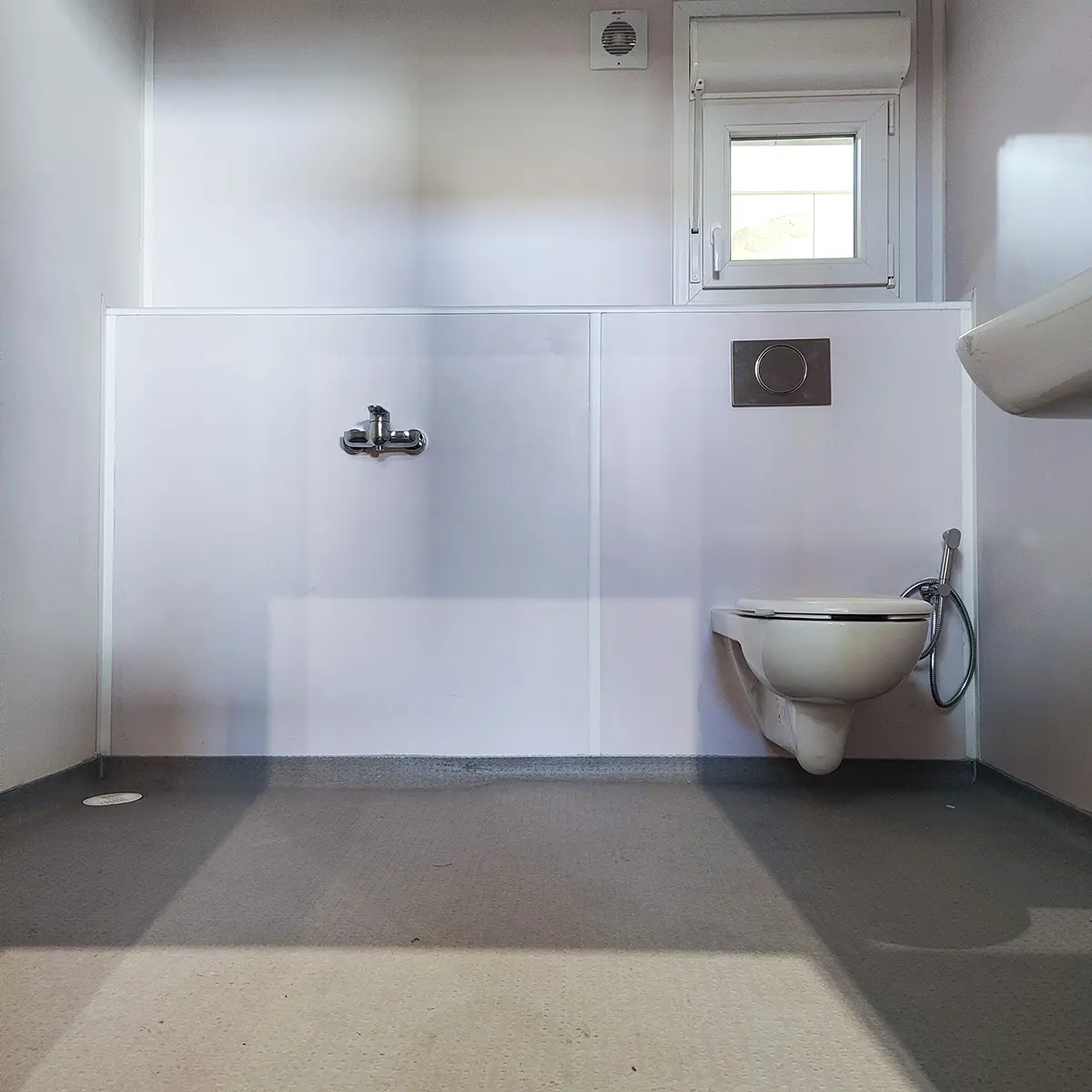
Barrier-free accessibility is the foundation of this design. Each accessible module features three rooms: two WCs and one technical room, all built around universal design principles that ensure independence and comfort for users with varying mobility needs.
Key features include:
- Foldable access ramp for flexible site installation
- Grab rails and mobility support equipment throughout
- Level-entry, barrier-free shower integrated directly into the floor
- Sensor-operated tap for touchless, hygienic use
- Thermostatic mixing valve capping water temperature at 45°C — preventing scalds in high-stress emergency environments
- Ergonomically positioned flush button
- Panic alarm pull cord for immediate emergency response
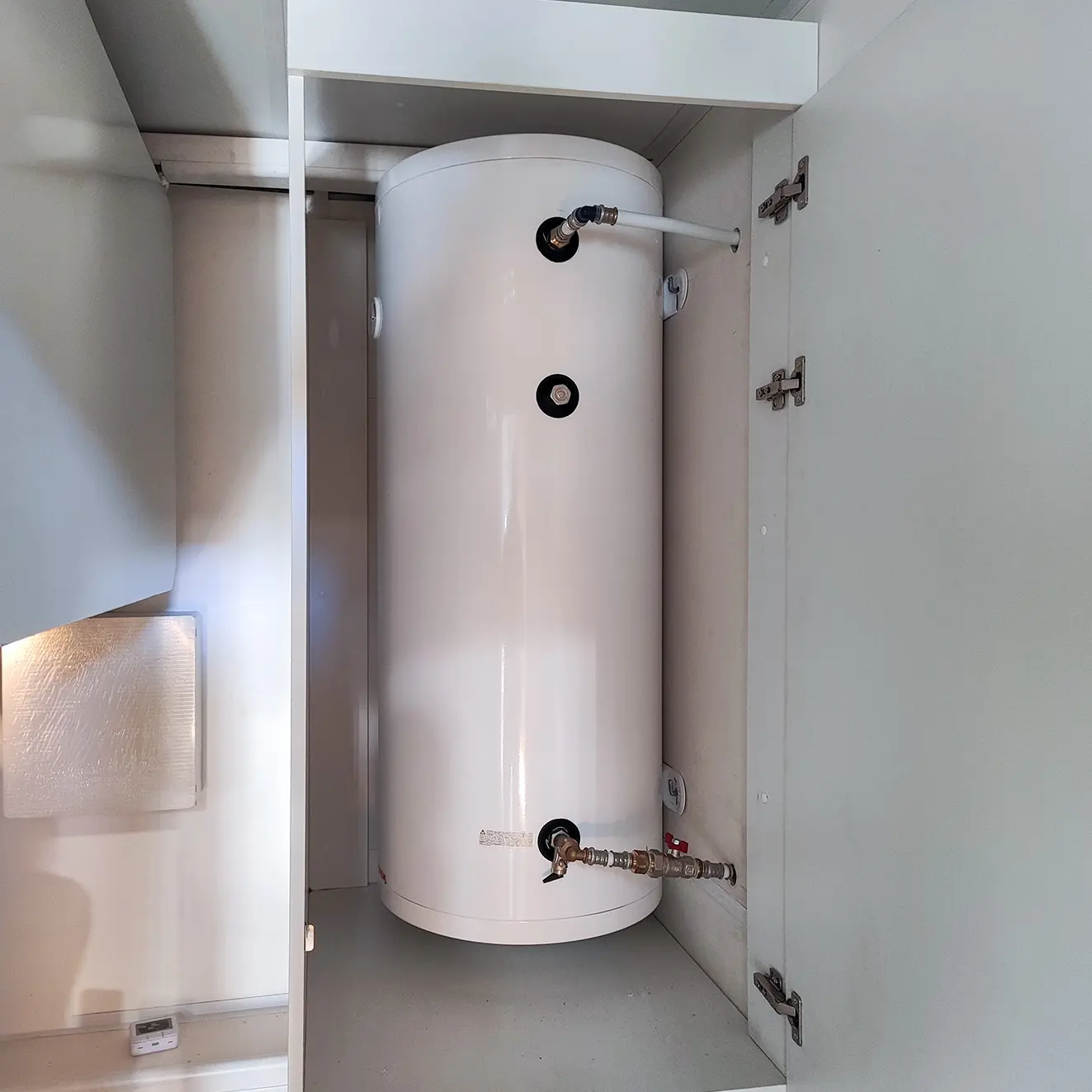
- Technical room with a 200-litre water heater and washing machine connection point
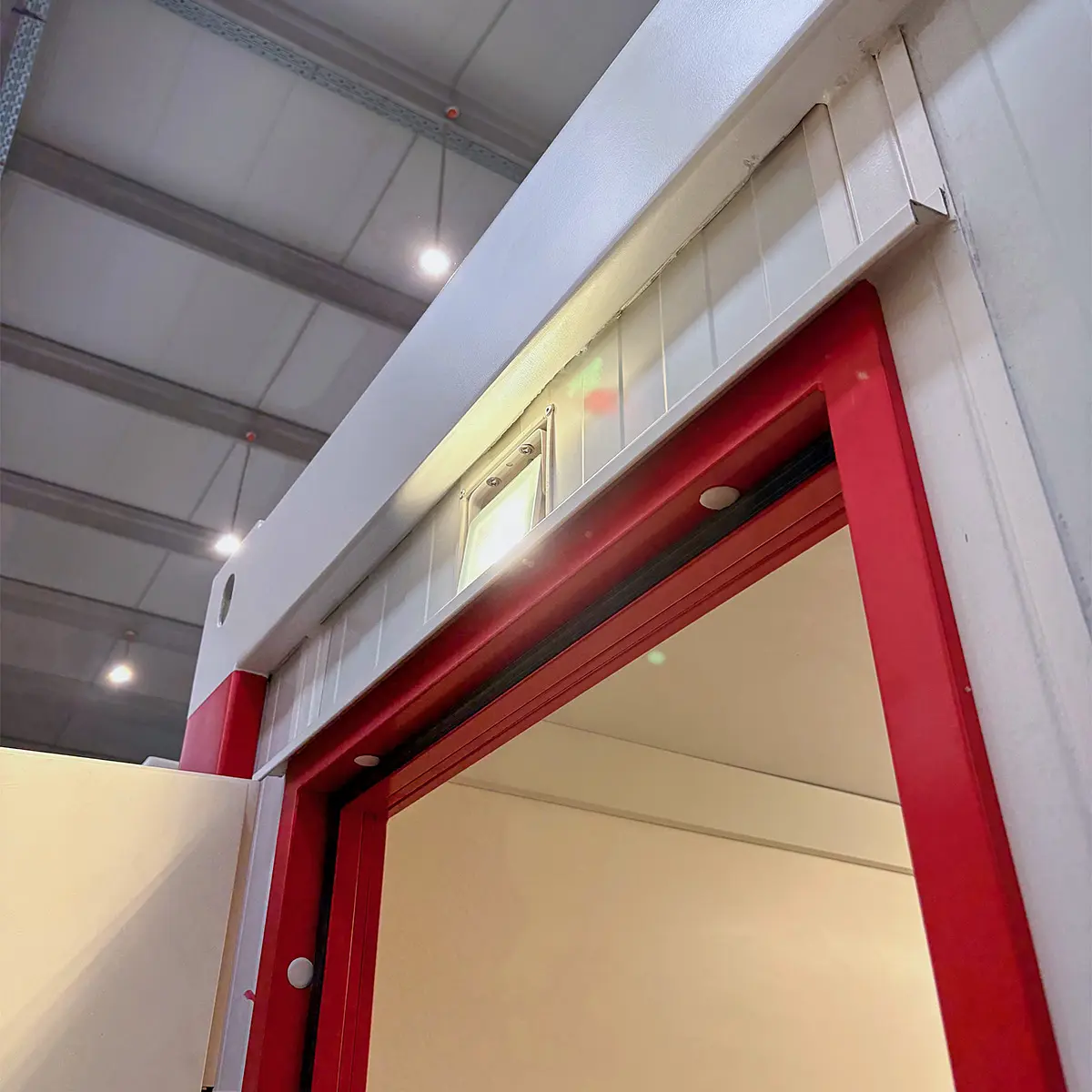
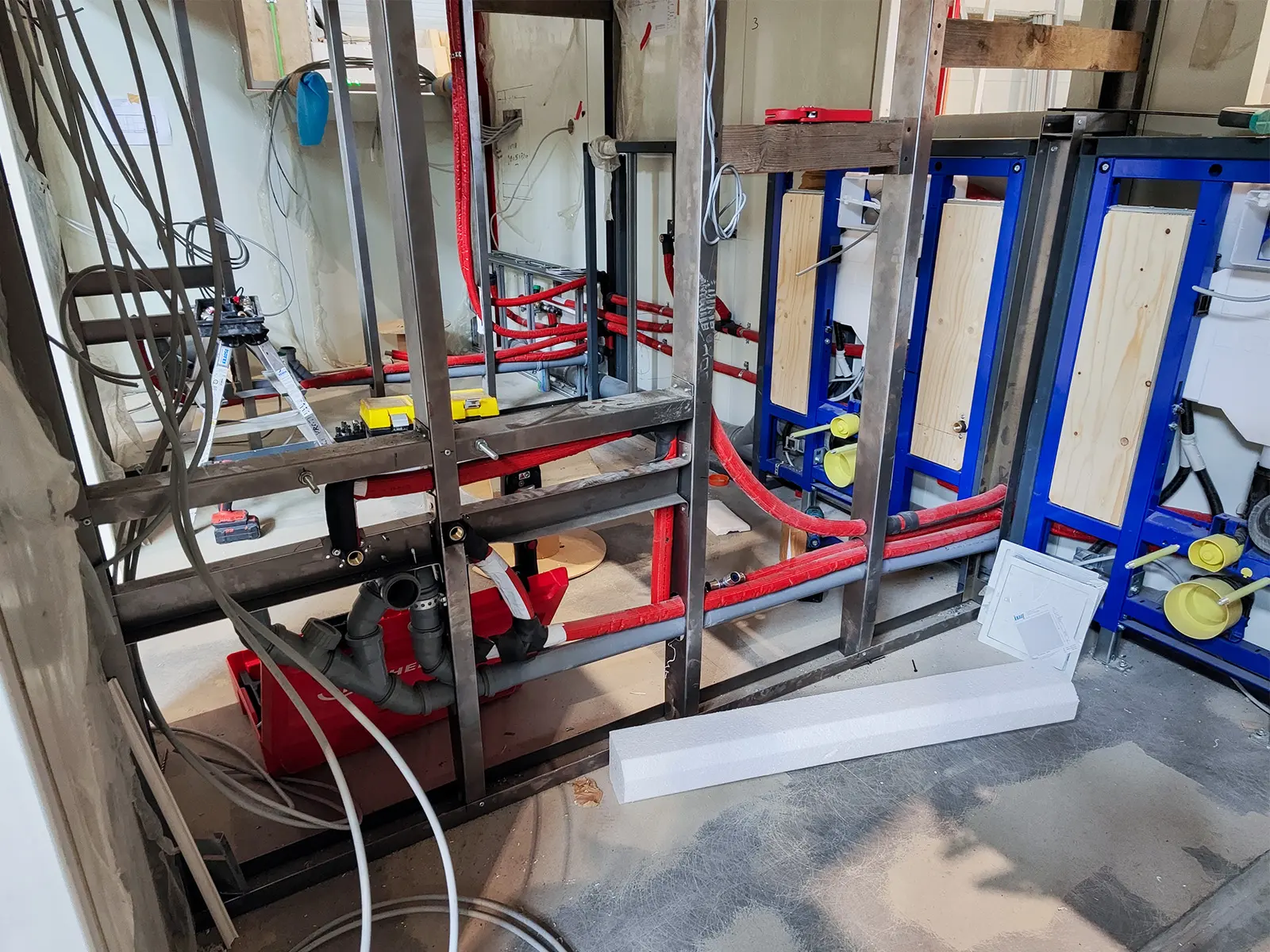
The module is fully ventilated, with climate monitoring sensors in every room and infrared heaters for rapid, energy-efficient warmth. Motion-activated lighting and ventilation reduce energy consumption and eliminate unnecessary contact points. All pipework and cabling run concealed within integrated wall systems — protecting infrastructure, extending service life, and maintaining a clean interior environment. External occupancy indicators ensure clear, intuitive communication for waiting users.
2. Staff Sanitation Modules
Built to support emergency responders and Red Cross field personnel, the staff sanitation modules deliver the same robust technical performance — configured for the realities of extended operational shifts.
Features include:
- Reliable, hygienically secure WC facilities
- Fully ventilated rooms with automated lighting
- Infrared heating for energy-efficient warmth
- High-quality sanitary fittings and durable surface finishes
- External water, drainage, and electrical connection points
- Technical room with 200-litre water heater and washing machine hookup
- Air conditioning unit integrated within the module’s footprint — protecting mechanical components and streamlining transport logistics
In high-pressure crisis environments, these units give personnel the functional comfort and reliability they need to perform at their best across long, demanding shifts.
3. Laundry Modules
Hygiene management is mission-critical in any emergency response. The laundry module is engineered to handle large-scale operations without compromise.
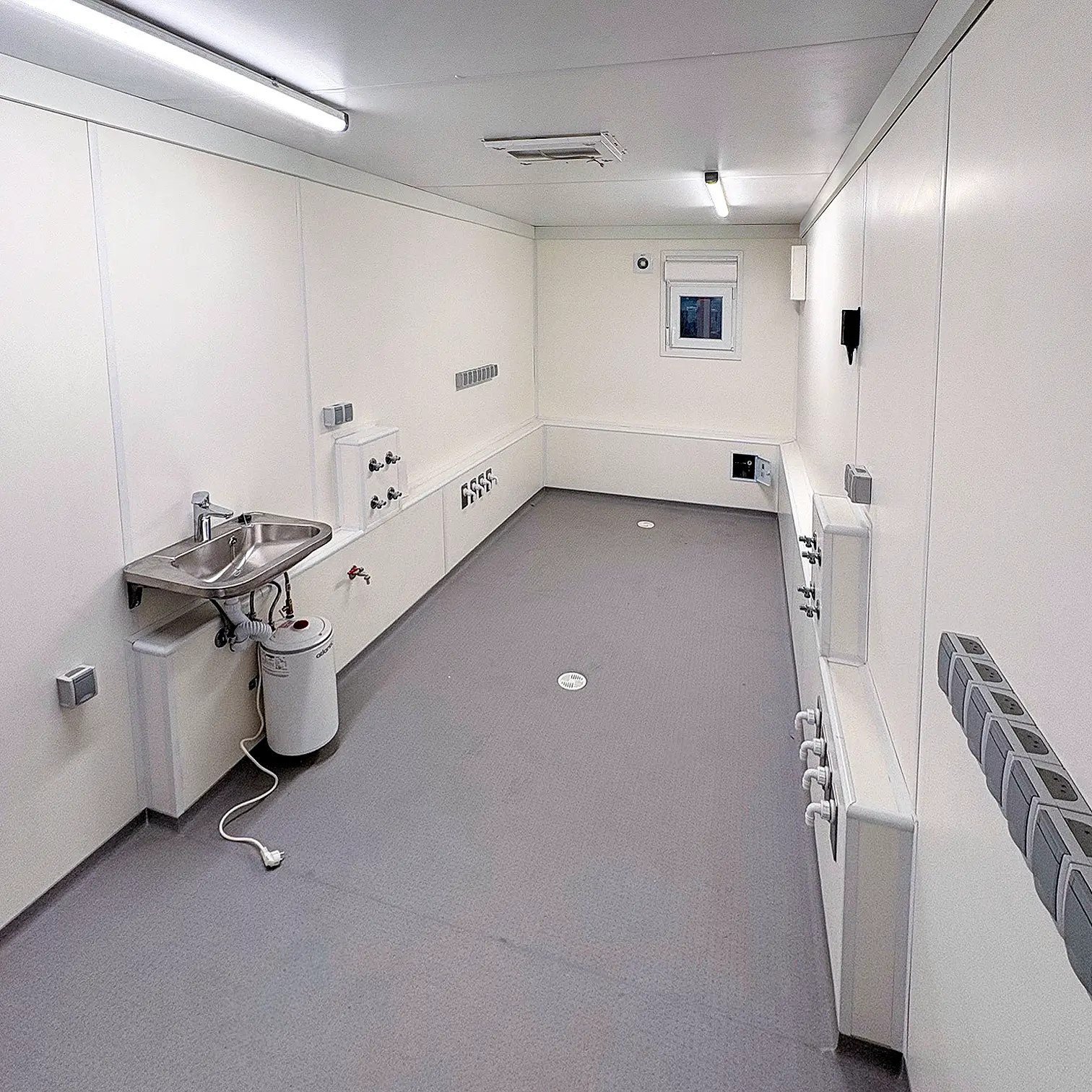
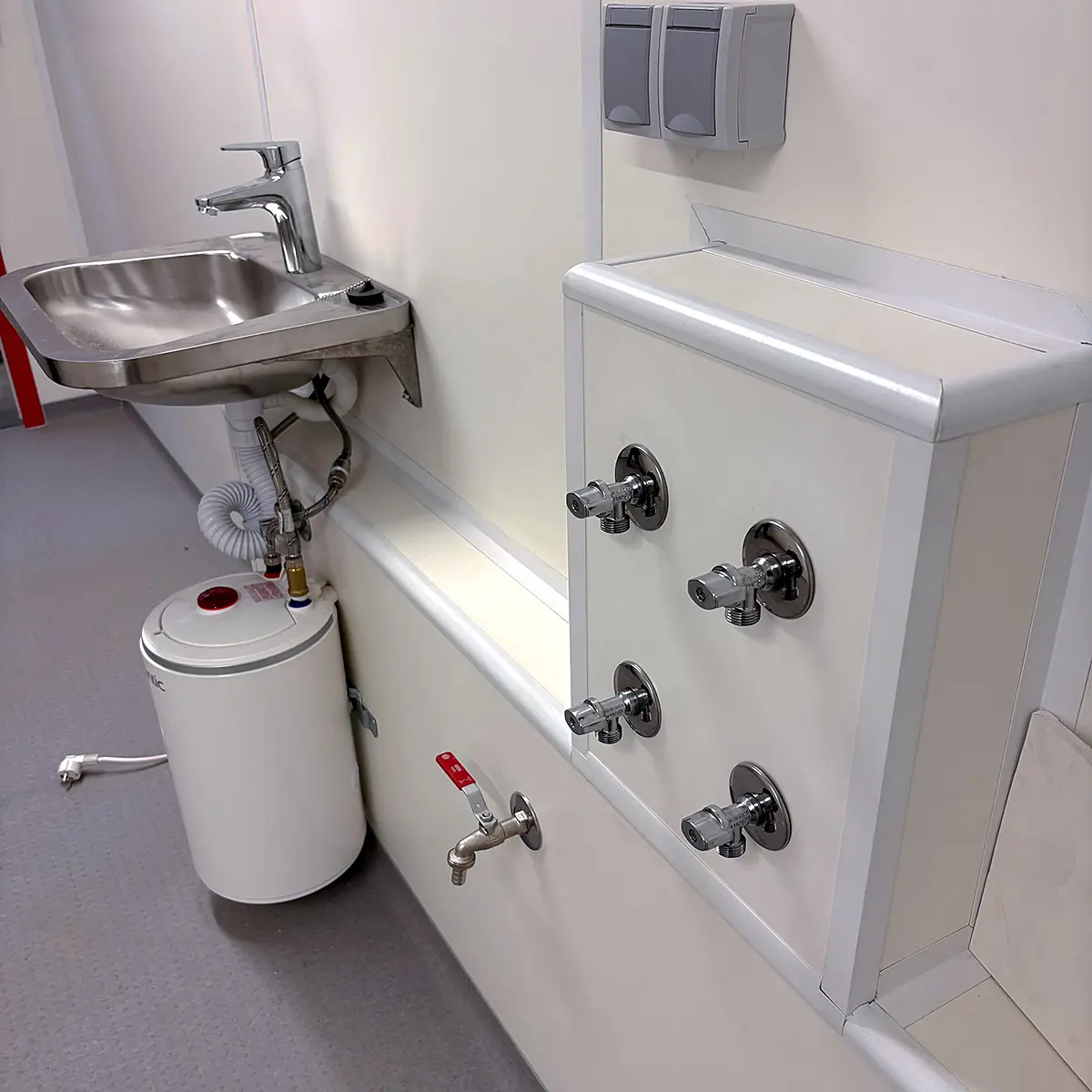
Configured to run 8 washing machines and 8 dryers simultaneously, the unit arrives with all water and electrical connections pre-installed — ready to activate immediately upon arrival on site. Like the sanitation modules, all pipework and cabling are routed within protected wall systems for long-term durability.
Additional features include:
- Stainless steel wall-mounted sink
- 10-litre accumulator water heater
- IP44-rated weatherproof electrical outlets
- Access panel for valve and pressure regulation
- Infrared heater
- LED linear lighting
- Mechanical ventilation system
Project Summary
Technical Infrastructure & Climate Control
All three module types share a common philosophy of integrated, intelligent systems. The air conditioning unit sits within the module’s own footprint — protecting mechanical components during transport and in the field. Motion-activated lighting and ventilation keep energy consumption to a minimum, while infrared heaters deliver fast, targeted warmth ideal for temporary or semi-permanent installations. Climate sensors in every room maintain consistent air quality throughout periods of intensive use.
Safety & Durability
Emergency conditions demand infrastructure that won’t fail when it matters most. These modules are fabricated from high-grade, resilient materials under controlled factory conditions — enabling precision assembly, superior insulation, and consistent quality across every unit. Built for repeated transport cycles, rapid deployment, and intensive use.
Built-in safety systems include:
- Thermostatic water temperature regulation
- Panic alarm system
- IP44-rated weatherproof electrical components
- Climate monitoring sensors in every room
- Ventilation designed to prevent condensation and moisture buildup
Mobility, Speed & Strategic Deployment
In a crisis, time is everything. Each module is an independent, self-sufficient unit — engineered for efficient transport and rapid positioning across any site. Modular construction dramatically reduces the time from decision to operational deployment compared to traditional building methods, giving humanitarian teams a critical advantage when it counts.
Human-Centered Engineering
This project is a demonstration of what modular construction can and should be: infrastructure that serves people first.
Sanitation facilities in emergency settings have a direct impact on health, human dignity, and psychological wellbeing. Clean, safe, and accessible environments prevent the spread of disease, support independence for people with disabilities, reduce psychological stress, and allow medical personnel to focus fully on their work — even in the most challenging circumstances.
Every module STAMEN delivers carries that responsibility.